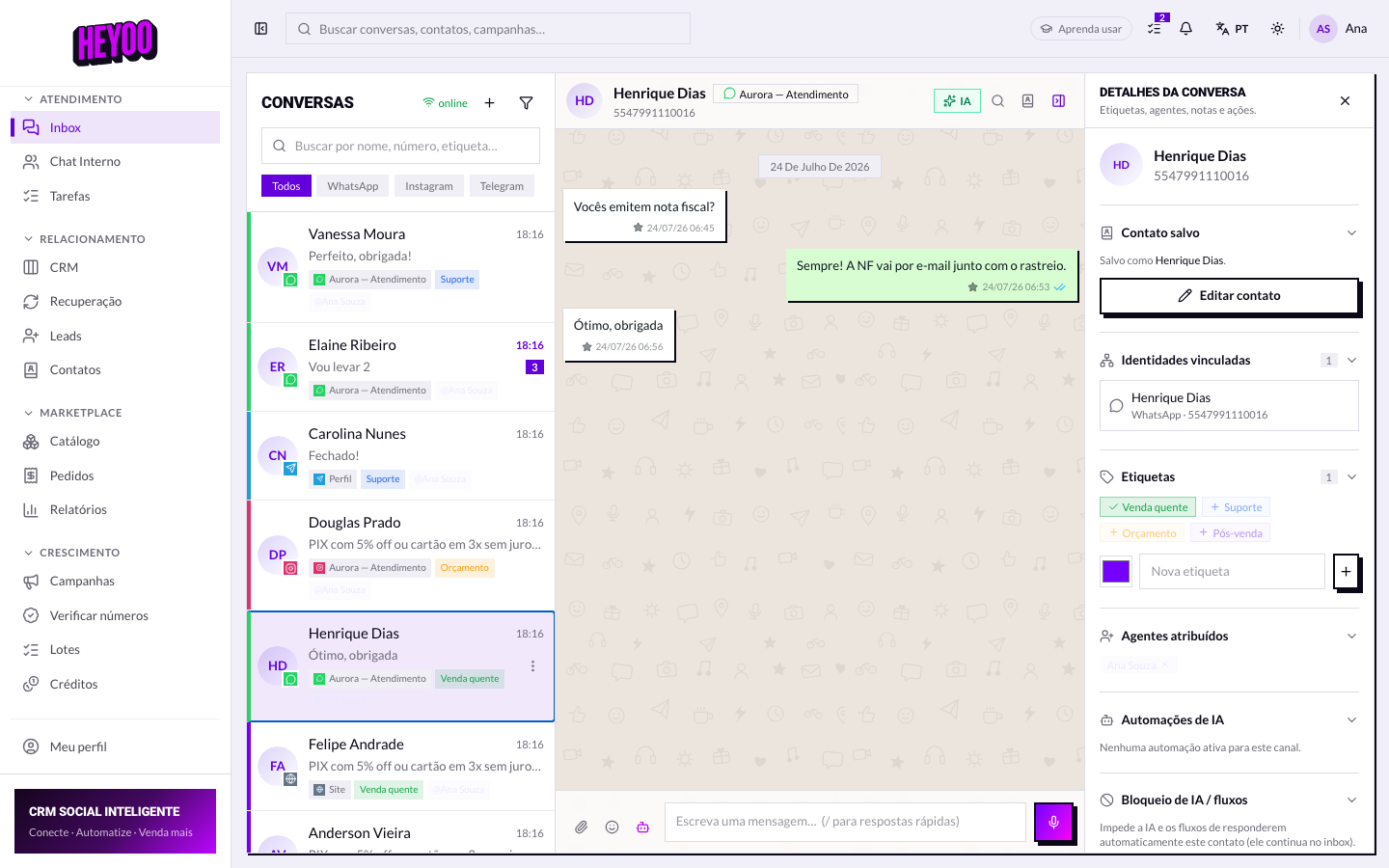
Inside a conversation, the AI is an assistant: it drafts, summarizes and translates. Nothing goes out to the customer unless you send it — except when the account has the AI answering on its own, and then the rules change.
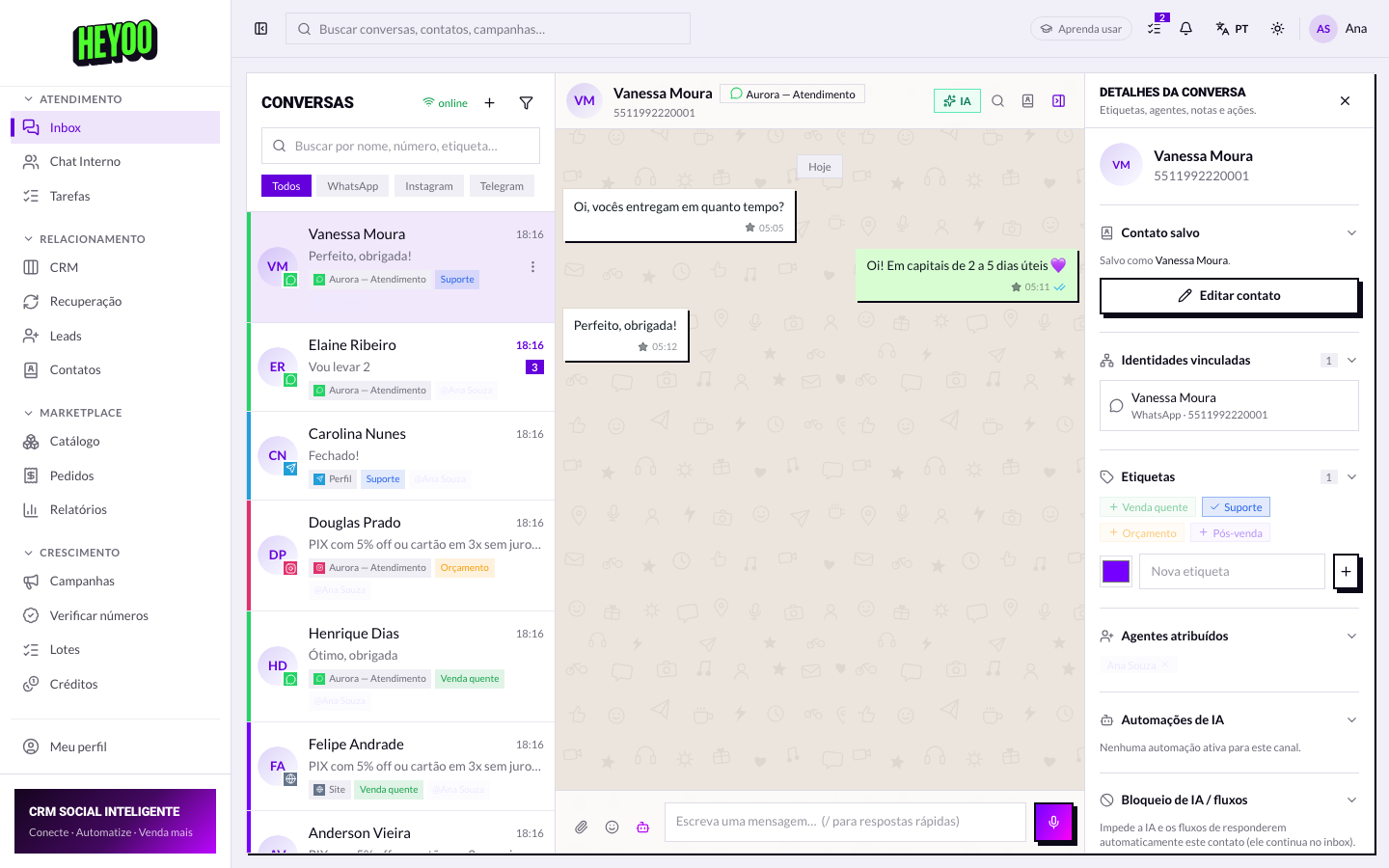

The tools
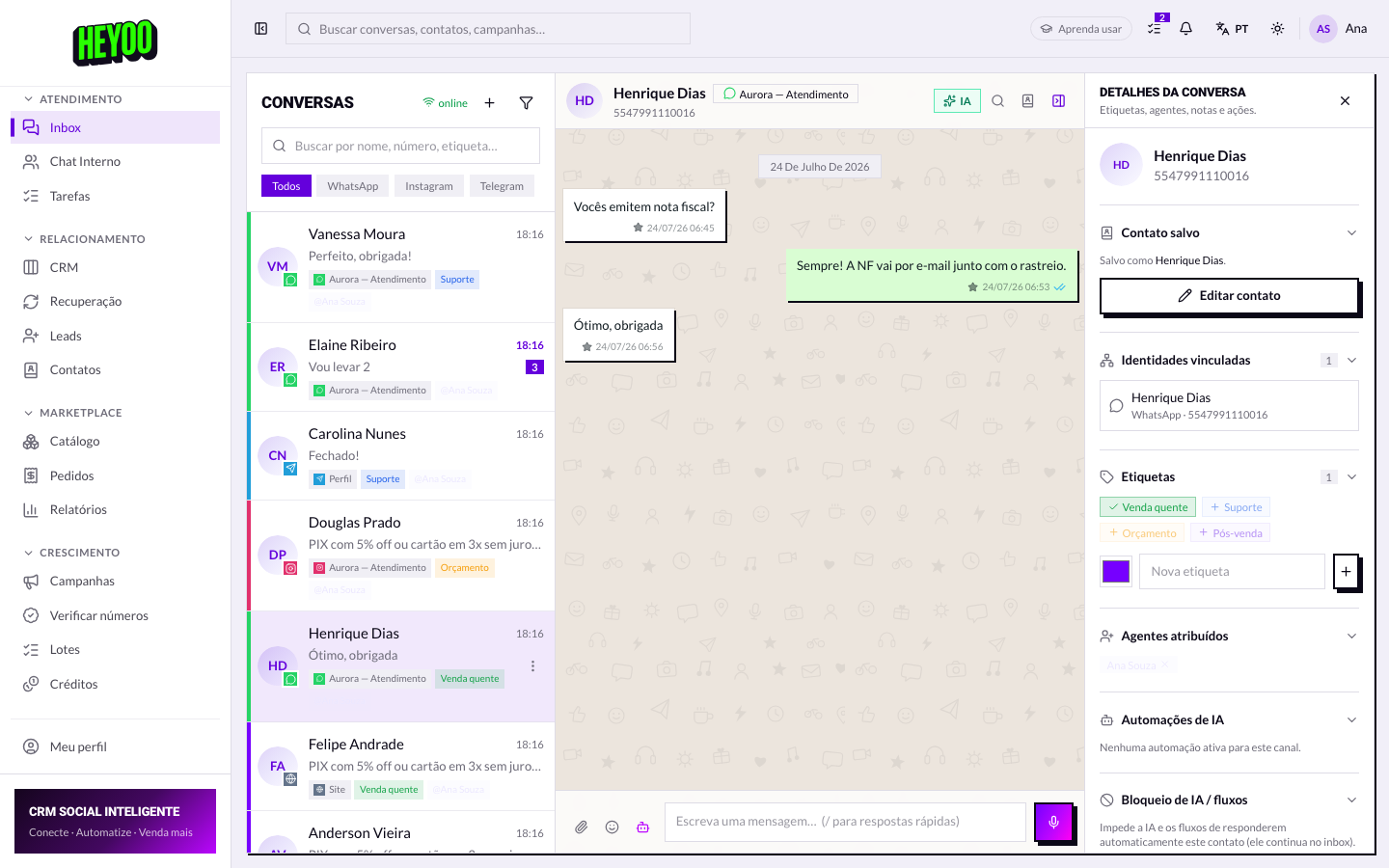
- Suggest a reply — reads the history and drafts something in your tone.
- Summarize the conversation — boils a long history down to a few lines. Great when taking over from a colleague.
- Translate — sorts out the customer who wrote in another language.
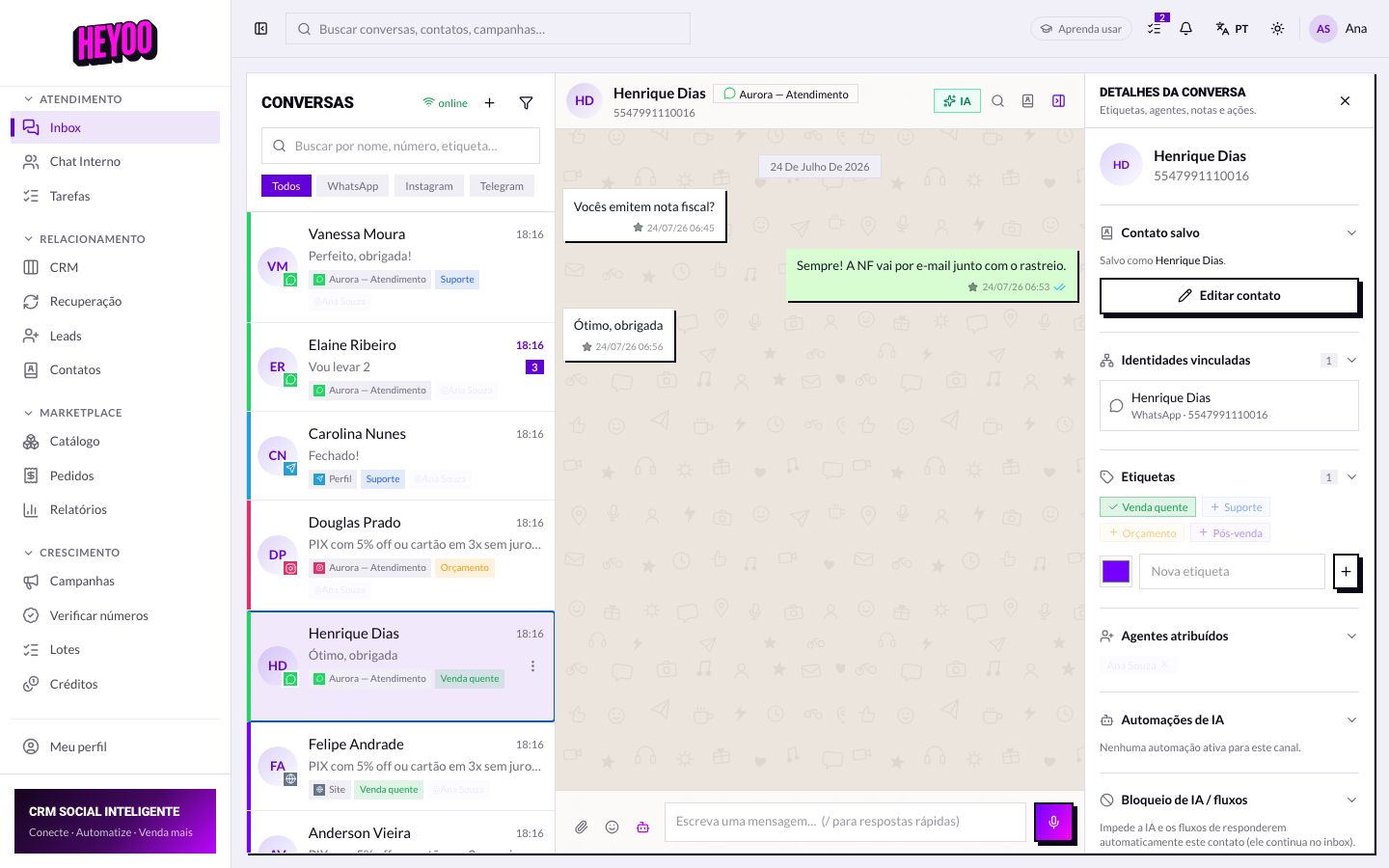
Read it before you send itThe AI gets the tone right almost every time. Price, deadline, return policy and availability it can invent — especially if the information is not written down anywhere it can reach. What goes out under your name is your responsibility.
When the AI is answering on its own

Pause before replyingIf the AI is active on that conversation and you reply over it, the customer gets two messages about the same thing — sometimes contradicting each other. Pausing is the first click when you take over.
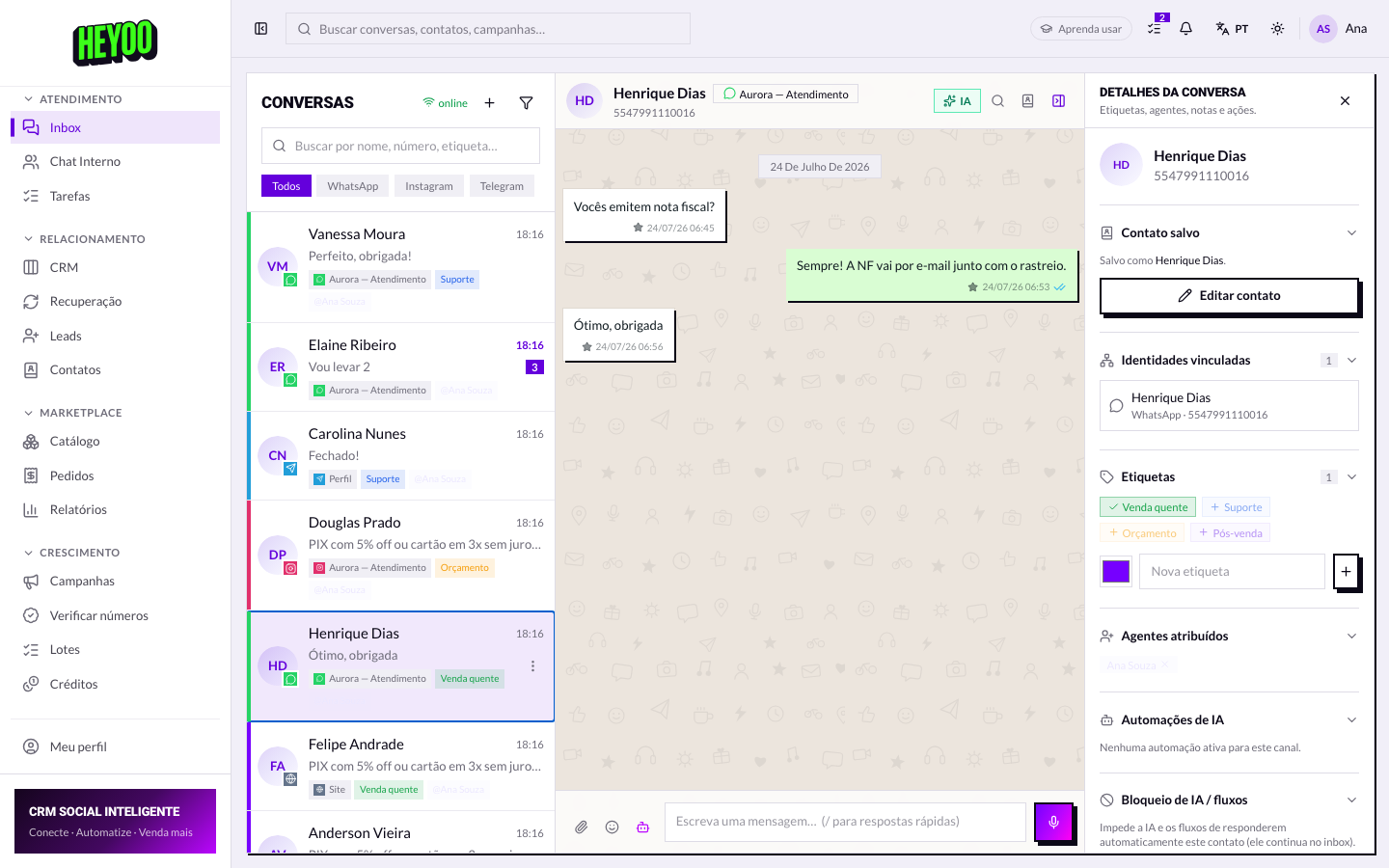
Hand it back to the AI at the end of your shiftOnce the hard part is settled, switching the AI back on lets it cover the rest of the night — the customer keeps getting answers and you do not have to stay on call.
What not to delegate
- Complaints — the customer wants to feel a person listened.
- Cancellations — this is when you learn the reason, and retention comes out of that.
- Price negotiation — a discount or a special condition is a decision, not a piece of text.